Usability Testing Results
+35%
More recycling drop-offs logged
+30%
Users completed their first learning module
+25%
Faster navigation to the Impact section
*Based on moderated usability testing with 3 participants comparing initial vs redesigned flows.
Participants were asked to log their first drop-off, complete a learning module, and navigate to the Impact section. All participants reported feeling more motivated to recycle again after seeing their progress tracked. These improvements were driven by three key design decisions: making progress visible, building transparency into the recycling process, and reducing friction to key actions.
Objective
Redesign NaturCycle to make recycling engaging, transparent, and habit-forming.
Time
3 Months (Early 2024)
Role
UX/UI Designer, UX Researcher, Interaction Designer.
Tools
Figma and Abobe Suite.
About
Naturcycle
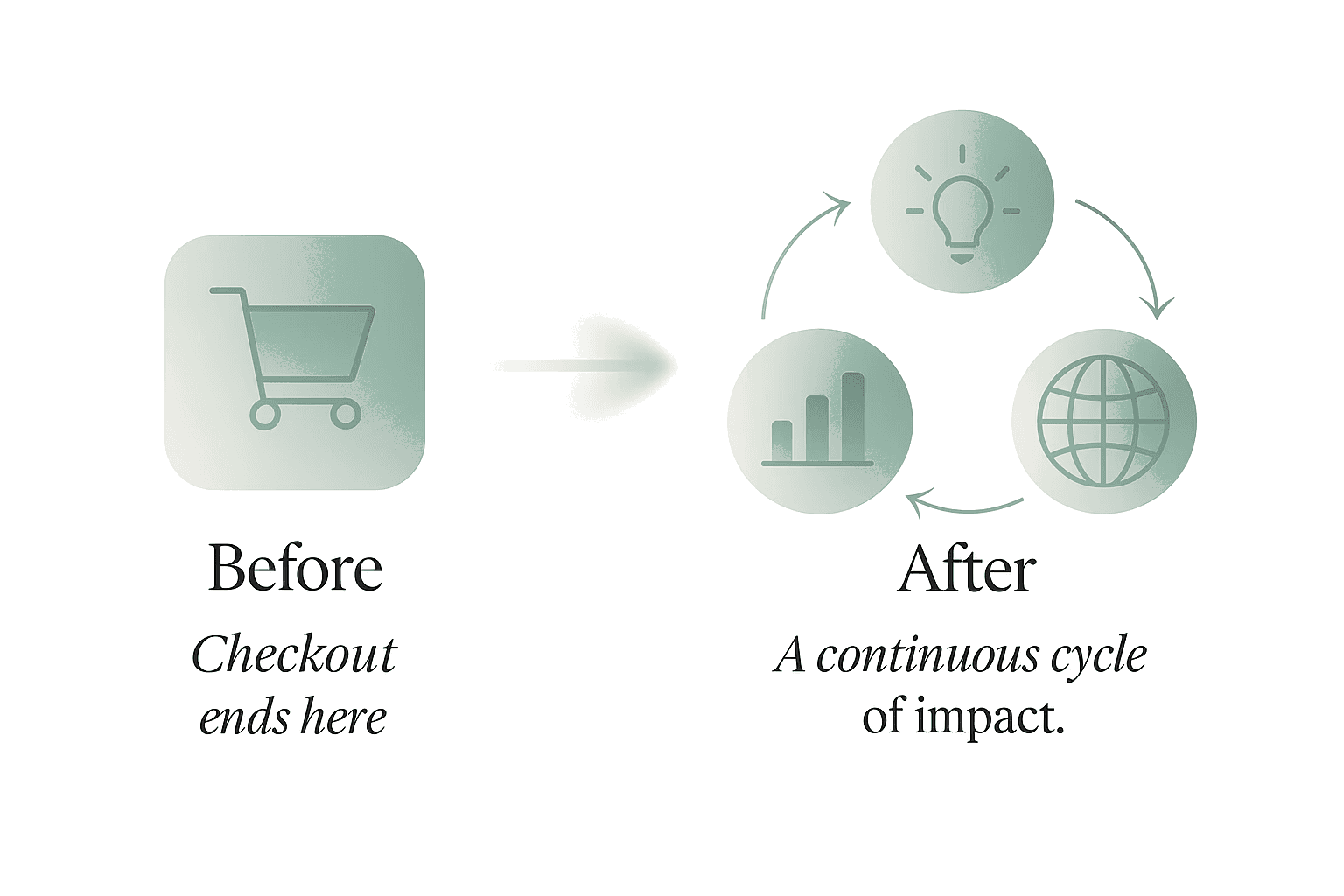
What began as a standard eco-commerce app evolved into a full behavior-change platform. NaturCycle's original design stopped at checkout— it sold sustainable beauty products but never brought users into the sustainability story. By redesigning the navigation architecture and adding an Impact Dashboard, interactive education, and drop-off logging, NaturCycle 2.0 transformed a transactional app into a continuous cycle of action and accountability.
Chapter 1
The Problem
NaturCycle sold sustainable beauty — but the app itself wasn't sustainable. It had no way to close the loop between purchase and impact.
Why sustainable beauty apps disconnect users
For eco-conscious users, buying a product is only the first step. But after checkout, the original NaturCycle offered nothing — no recycling guidance, no impact visibility, no reason to return. Across user interviews, the same pattern surfaced:
"I feel like I'm just buying and leaving—I never see the real benefit."
—User #3 (Crunchy Mom)
User #3
"I never knew what happened after I dropped off my tube."
—User #6 (Farm-Girl Student)
User #6
The Missing Link
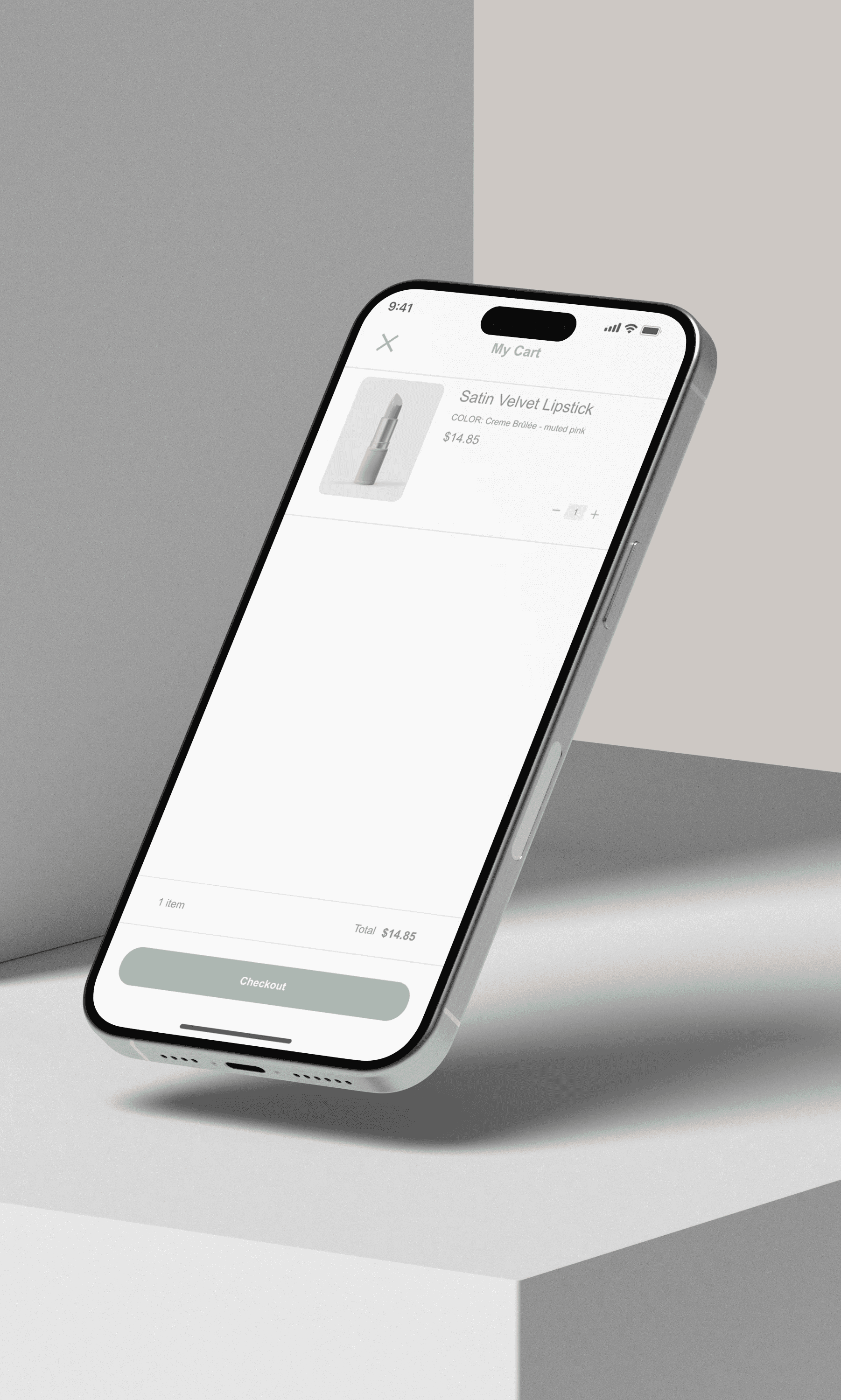
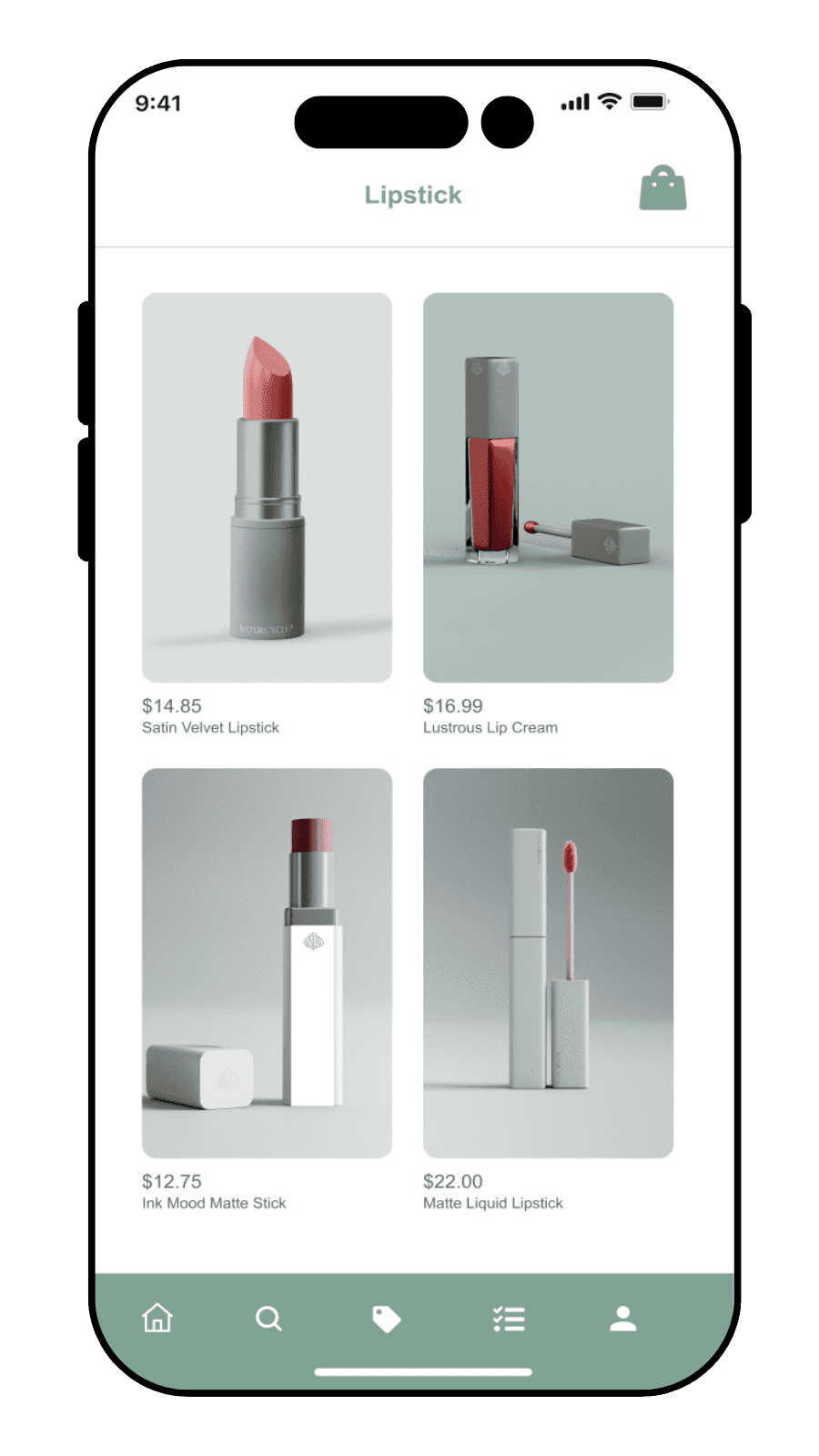
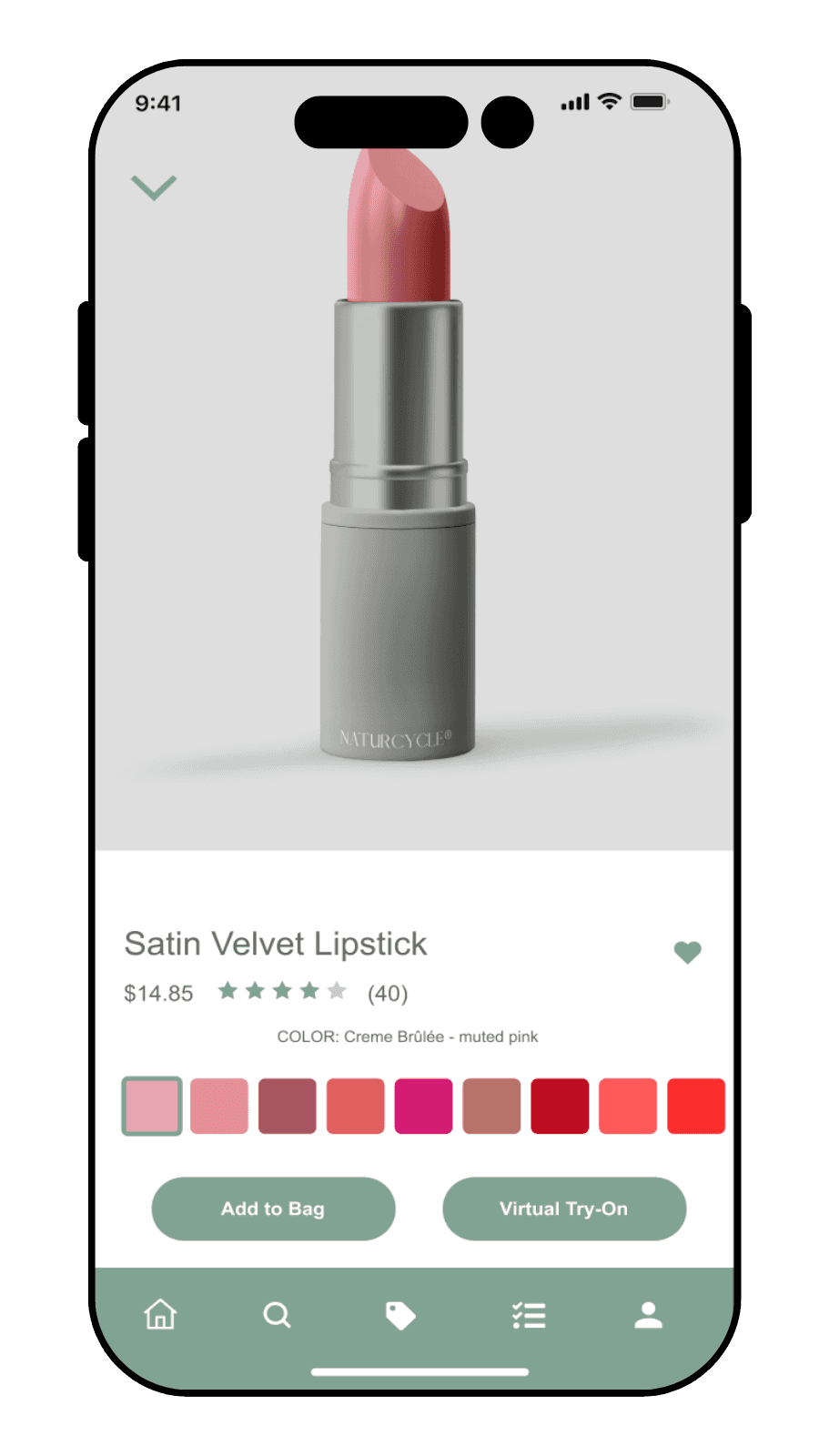
The original app guided users through one flow: Browse → Add to Cart → Checkout. That was it. Three critical gaps consistently surfaced from research and usability testing with 3 participants on Proto v1:
No progress feedback
Users had no reason to return.
1
Browse Catalog
No transparency
The waste→beauty story was never shown.
2
Add to Cart
No Impact
Navigation dead-ended at checkout.
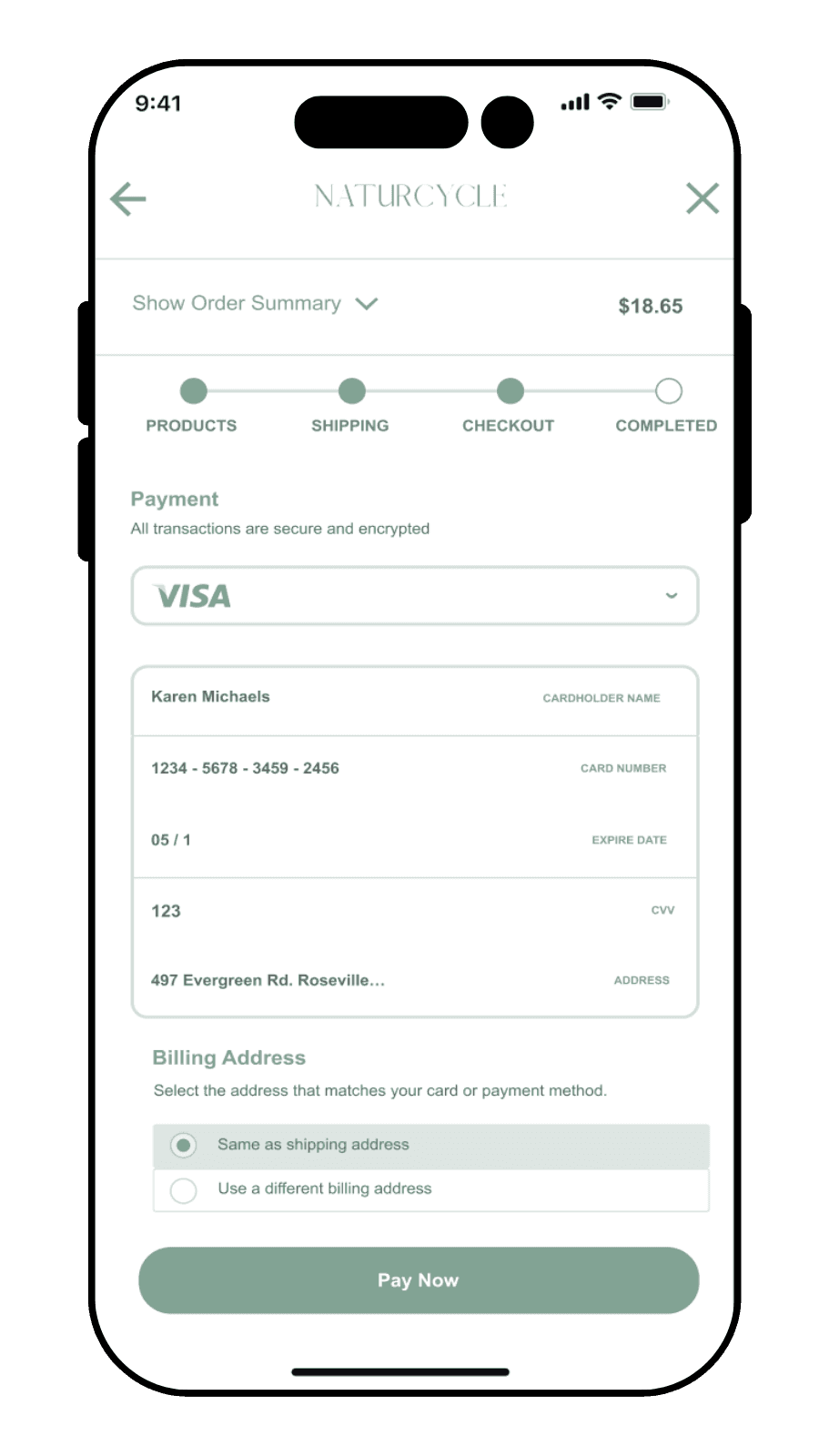
3
Checkout
Chapter 2
Key Insights
Understanding users’ recycling habits, trust concerns, and motivation became the foundation for NaturCycle’s direction.
Methods: Online survey (n=30), 4 user interviews, and 3 usability tests on Proto v1.
1
Progress Makes Habits Stick
Insight
7 in 10 users wanted progress indicators, but the app gave zero feedback after a drop-off.
Why it mattered
Without visible momentum, users had no reason to recycle again. Progress was the missing trigger — not willingness.
2
Transparency Builds Trust
Insight
Users distrusted vague eco-claims without seeing the full recycling process.
Why it mattered
NaturCycle's Waste → Beauty story was never shown — and it was the strongest trust and retention lever.
3
Friction Kills Participation
Insight
Users forgot to recycle when not prompted. The original nav had no Impact or Learn tab — they didn't exist.
Why it mattered
Good intentions aren't enough. Recycling and learning had to be the path of least resistance, not a detour.
The Personas
Based on 4 user interviews and an online survey (n=30), two behavioral archetypes emerged.

Age 52 | Toronto, ON

Maggie Sidebottom, The Farm Girl
Chapter 3
Design Decisions
The research revealed users weren't blocked by eco-values — they were blocked by invisibility, friction, and lack of structure. These insights translated into three clear design priorities:
Restructure navigation to make impact and learning first-class destinations
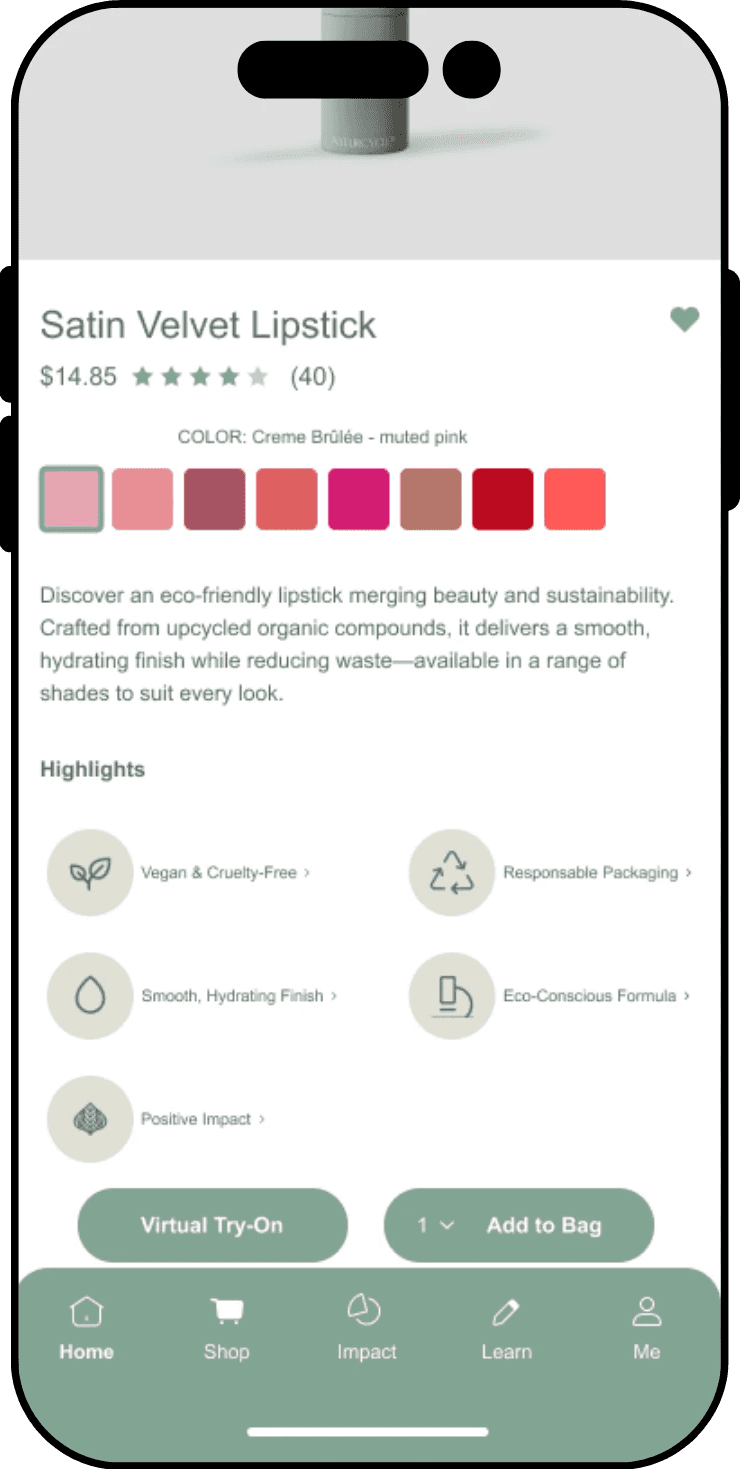
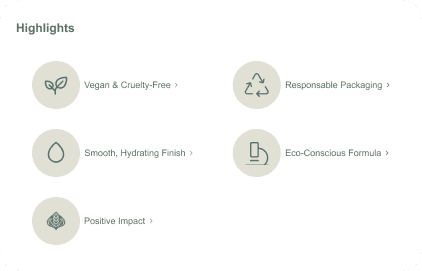
Make sustainability visible on every product page
Close the recycling loop with an Impact Dashboard and drop-off logging
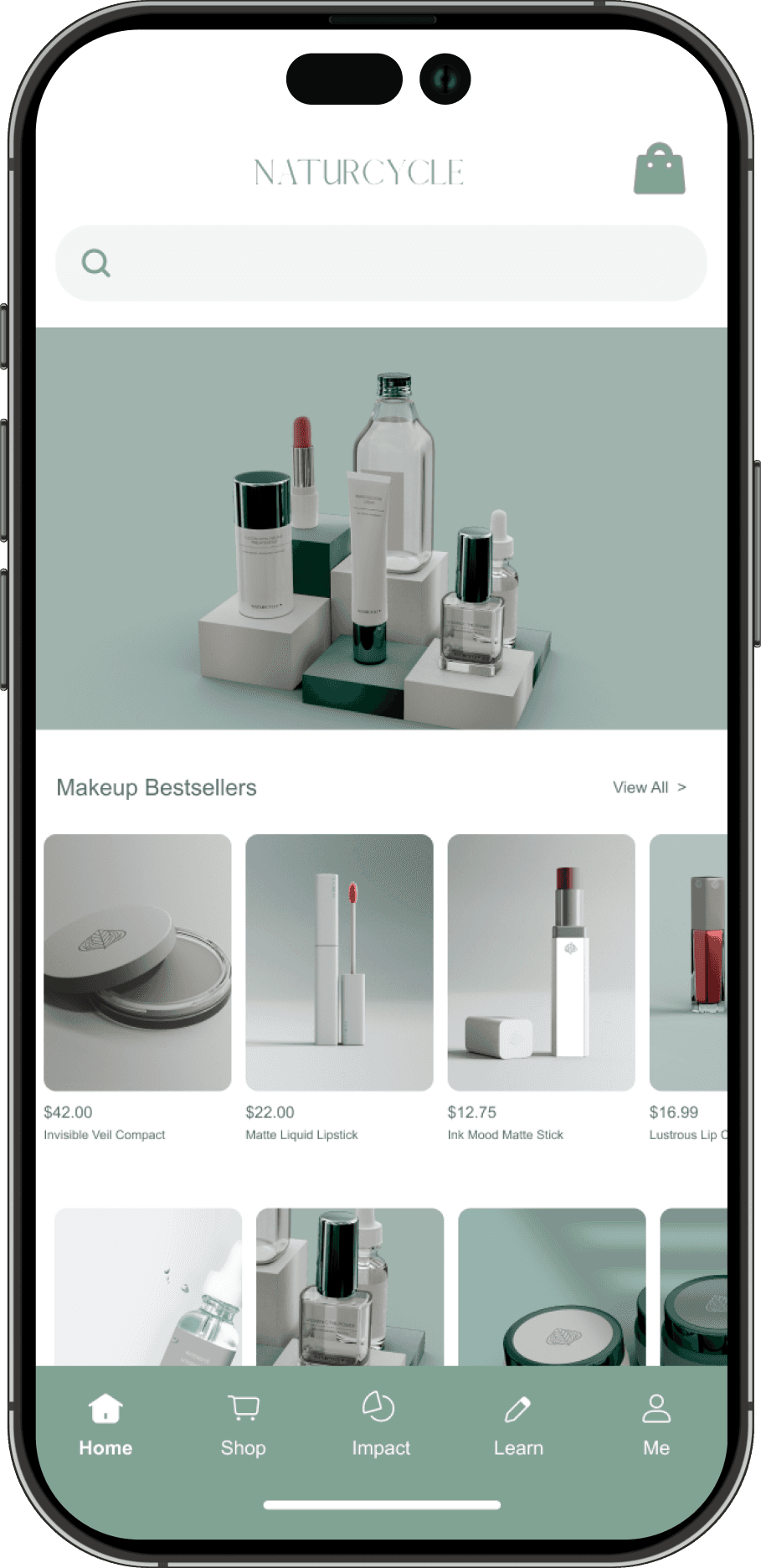
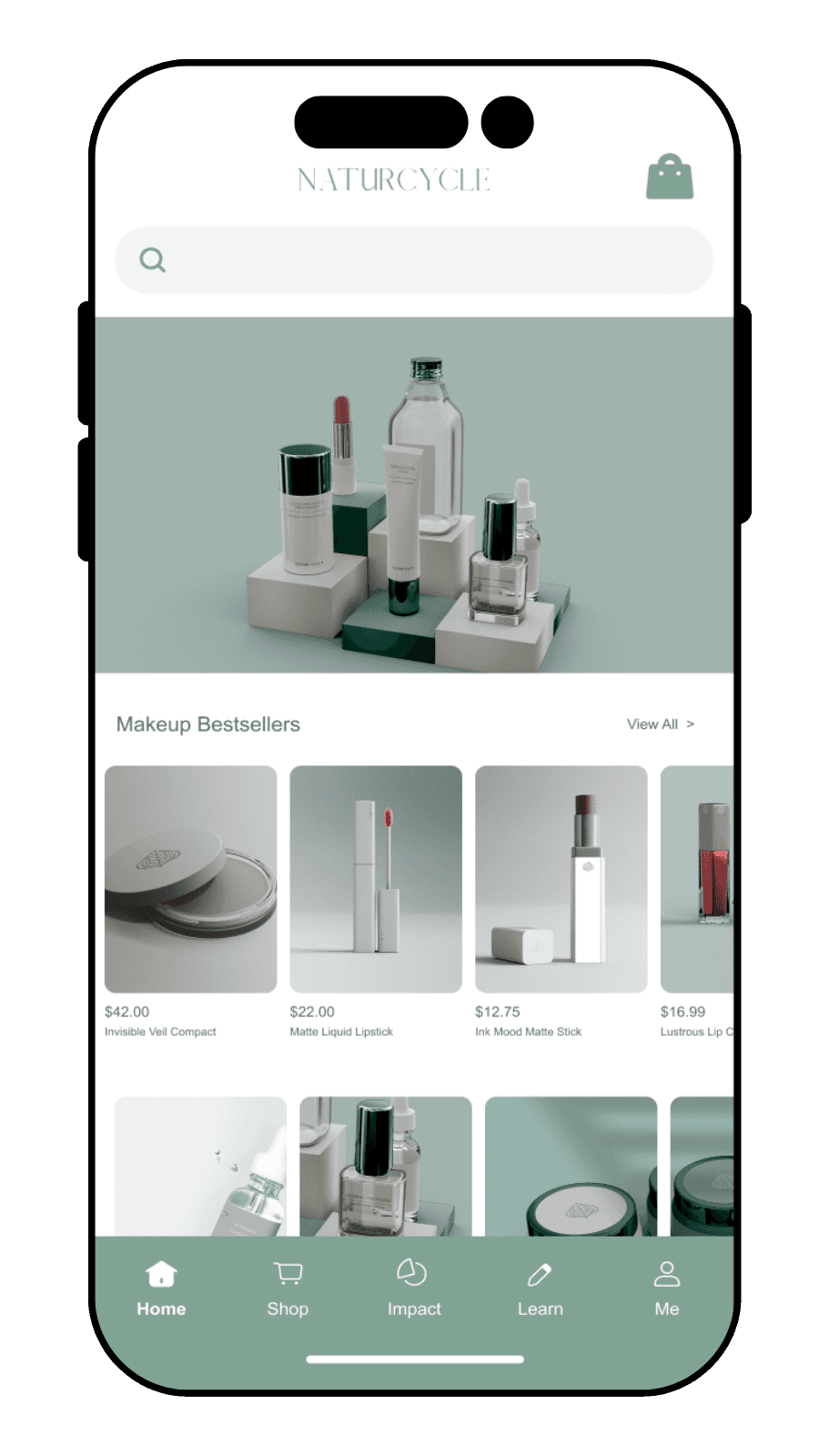
An Ecosystem-Driven Structure
Insight: 7 in 10 users wanted easy recycling prompts, but the nav gave them no path to act on it.
Action: Restructured from 5 transactional tabs to 5 purpose-driven tabs — Home, Shop, Impact, Learn, Me.
Outcome: Users could reach their recycling log or learning content in one tap from anywhere in the app.
Home
Shop
Impact
Learn
Me
Product Pages with Purpose
Before
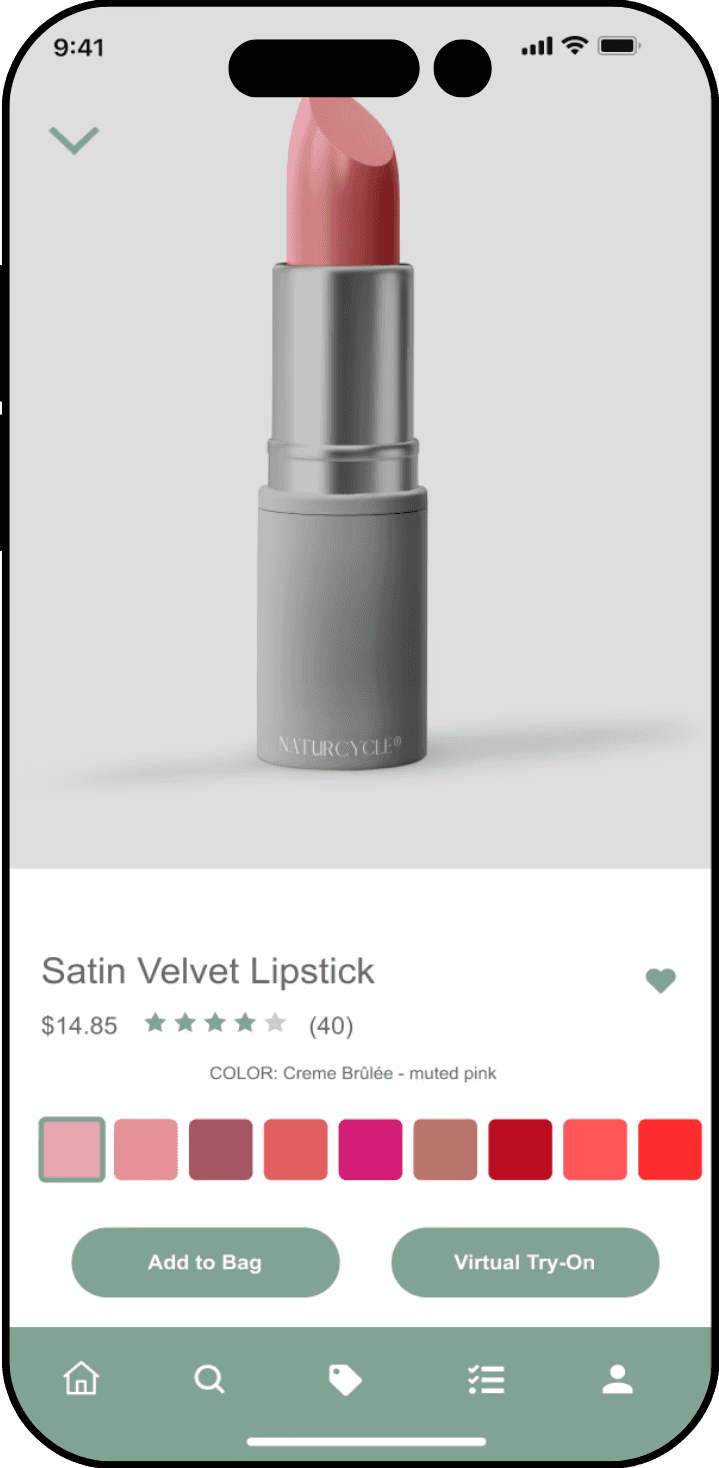
After
Impact Dashboard
Metrics at a glance.
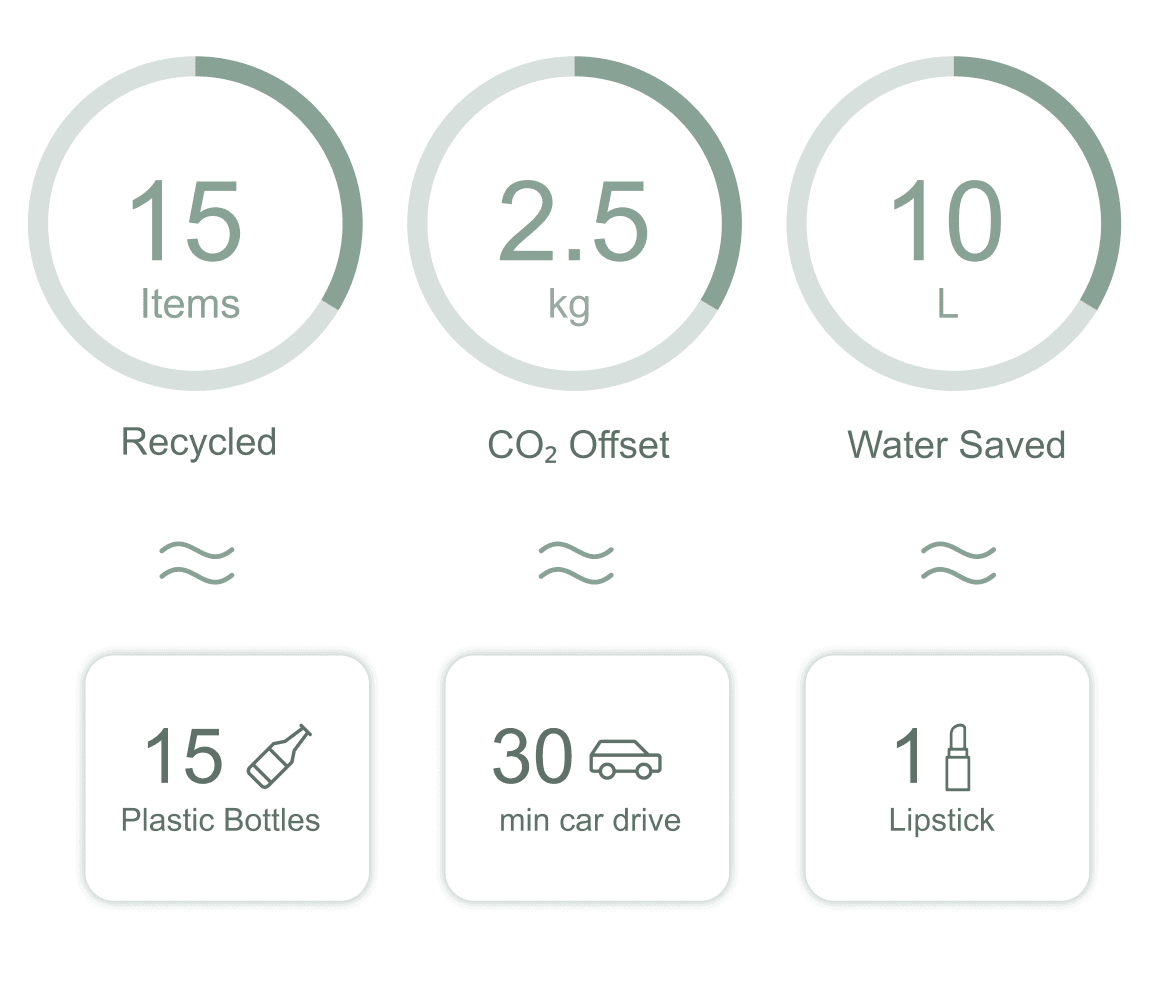
Items recycled, CO2 offset, water saved
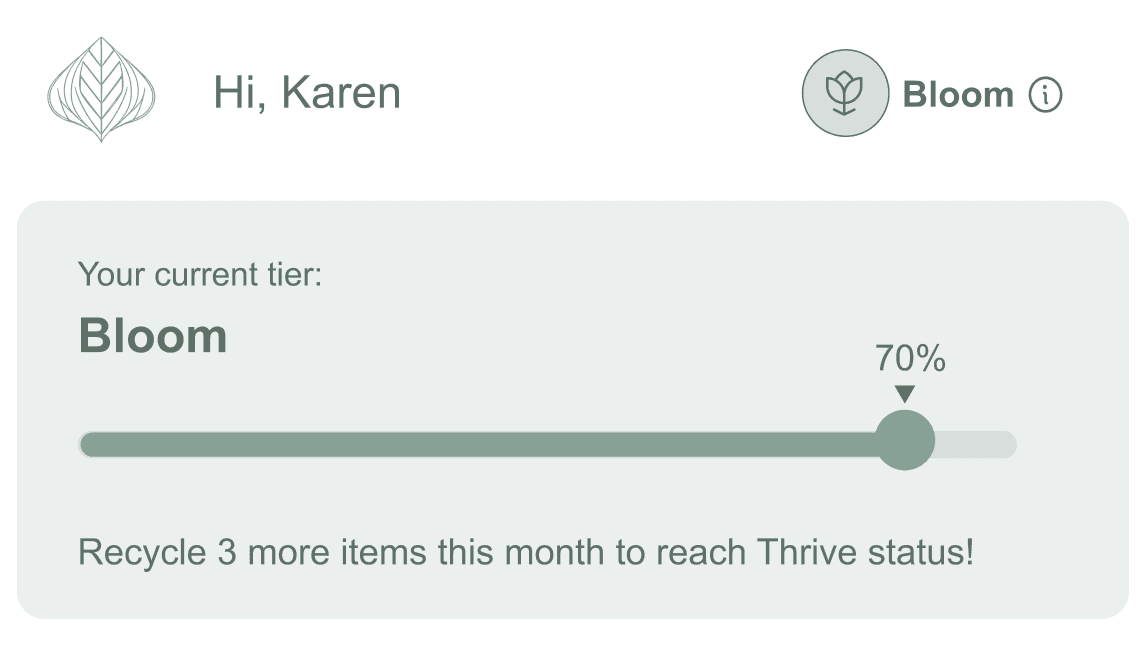
Progress.
Tiered badges (Seedling → Evergreen).
Engagement.
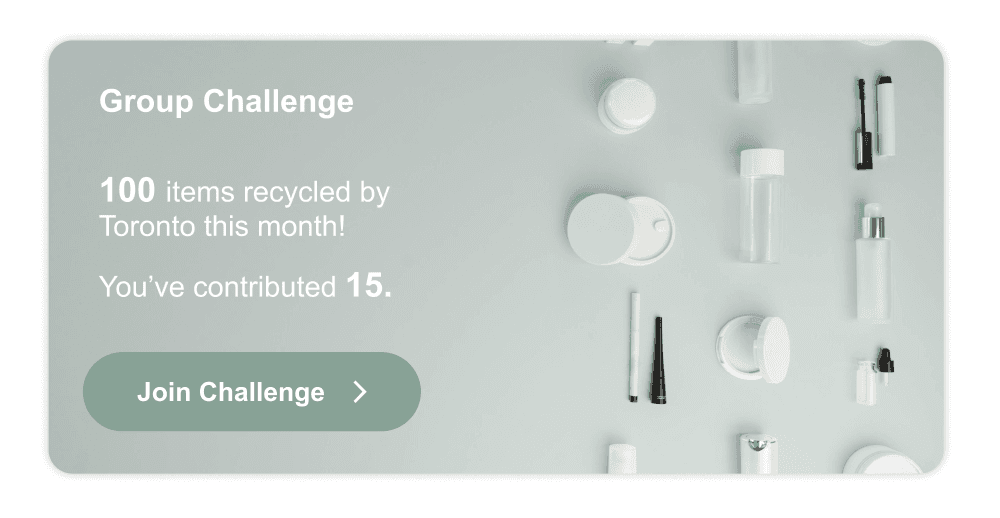
Weekly challenges + community missions.
Convenience.
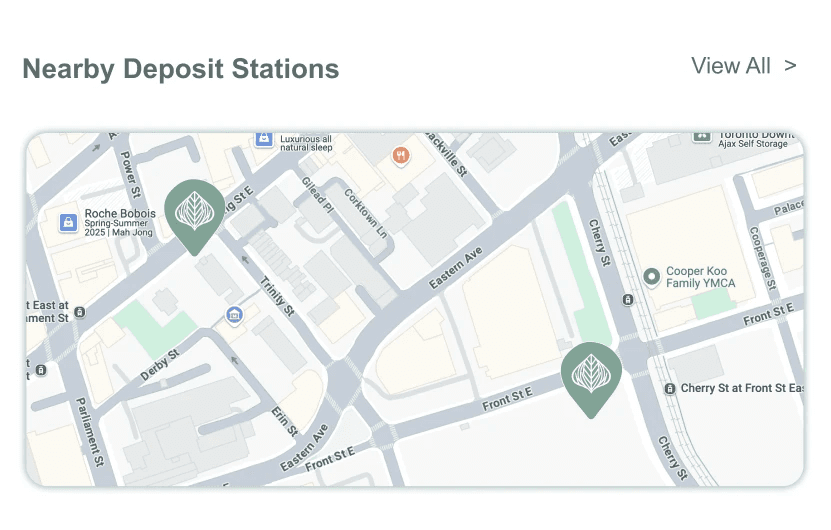
Map of nearby drop-off stations with QR check-ins.
Chapter 4
From Transaction to Cycle
Three research gaps. Three design decisions. Here's what NaturCycle 2.0 looks like.
Shop-Only Navigation → An Ecosystem of Purpose
Five tabs, five purposes. Every destination a user needs — shop, learn, track, return — is one tap away from anywhere in the app.
Home
Shop
Impact
Learn
Me
Discover.
Your feed and a quick impact snapshot.
Browse.
Sustainable beauty, filtered to your needs.
Track.
Every drop-off logged, every impact measured.
Understand.
The full waste → beauty story, step by step.
Grow.
Profile, reminders, and habits in one place.
Product Page → Sustainability Story
The redesigned product page surfaces eco-badges and sustainability highlights inline. Tap into the Learn tab and the story goes deeper — a 6-step interactive journey showing exactly how an empty tube becomes a new product.
Interactive Layers.
Inline quizzes, "Learn More" accordions, immersive visuals.
6-step Journey.
Collection → Sanitization → Extraction → Formulation → Packaging → You.
Purpose.
Makes recycling transparent, tangible, and empowering.
Dead-End Checkout → A Loop That Closes
Checkout used to be the end. Now it's the beginning. The Impact tab tracks CO₂ offset, water saved, and badge progress over time. Log a drop-off in three taps — QR scan or manual — and watch the dashboard update in real time.
Fast Scan.
QR Logs drop-off instantly.
Feedback.
Dashboard updates in real time.
Manual Option.
Dropdown for location, type, and quantity.
Chapter 5
Outcomes & Reflection
This chapter reflects on what I learned from designing for behavior change in a space where eco-values are strong but eco-actions are weak.
The Reflection
The original design assumed that selling sustainable products was enough. Research proved otherwise — users cared deeply about sustainability but needed structure, feedback, and transparency to act on those values consistently. By restructuring the app around impact and education, not just commerce, NaturCycle 2.0 gave users a reason to return beyond their next purchase.
Usability testing validated the dashboard and drop-off flow, but surfaced a key limitation: I only tested early interactions. Next, I'd evaluate whether the tiered badge system (Seedling → Evergreen) sustains engagement over 30 and 90 days — and whether community features (the leaderboard and group challenges) drive incremental recycling behavior or just social comparison.
This reinforced that in behavior-change design, visibility of impact matters as much as ease of action — and that trust is built through specificity, not claims.
Next Steps

1
Reward Ecosystem
Discounts + loyalty rewards for verified recycling.

2
Deeper Personalization
Tailored challenges, badges, and learning content.
3
Sustainability Reports
Monthly/annual CO₂ and waste impact summaries.

4
Accessibility & Inclusion
Multilingual support + simplified UI for all users.
Designing for behavior. Designing for impact.
Next
Project